Southern Utah Wilderness Alliance

Conservation Groups Applaud Signing of Greater Natural Buttes Record of Decision

3:42 pm

SOUTHERN UTAH WILDERNESS ALLIANCE * NATURAL RESOURCES DEFENSE COUNCIL * SIERRA CLUB

For Immediate Release: May 7, 2012

Contact:
Stephen Bloch, Southern Utah Wilderness Alliance, 801.428.3981
Bobby McEnaney, Natural Resources Defense Council, 202.289.2429
Mark Clemens, Utah Chapter of the Sierra Club, 801.467.9294 x.102

(Salt Lake City):  National and regional conservation groups applaud tomorrow’s planned signing of the Greater Natural Buttes Record of Decision by Interior Secretary Ken Salazar.   http://www.suwa.org/2012/04/05/suwa-announces-landmark-conservation-agreement/.  The decision to allow the Anadarko Petroleum Corp., to drill some 3,500 natural gas wells in a heavily developed area in northeastern Utah, to be announced Tuesday by Interior Secretary Ken Salazar Tuesday, shows how competing interests can be balanced in a way that is a win-win for all sides.

“We appreciate Anadarko’s willingness to meet with us, listen to our concerns, and adjust its project to eliminate and mitigate impacts,” said Stephen Bloch, energy program director for the Southern Utah Wilderness Alliance.  As a result, the company’s final proposal eliminated several locations in the White River proposed wilderness area.  In addition, Anadarko acquired private lands along the river corridor for conservation purposes and is taking other steps to mitigate or eliminate the sight and sound of development for families and river runners on the White River.  “These kinds of compromise agreements confirm that Utah can have a robust energy sector while at the same time protect its wildest public lands.”

The Interior Department’s approval of the Greater Natural Buttes project stands in stark contrast with its support for the controversial Gasco natural gas project.  That project, which has been heavily criticized by conservation groups and in the New York Times, Akron Beacon-Journal, and Salt Lake Tribune, would permit Gasco Energy, Inc. to drill more than 200 new natural gas wells in the Desolation Canyon proposed wilderness, an area recognized by the Interior Department and conservationists as being wilderness caliber. (http://www.nytimes.com/2012/04/07/opinion/a-win-win-deal-on-natural-gas.html?_r=1, http://www.ohio.com/editorial/editorials/drill-protect-and-preserve-1.301196, http://www.sltrib.com/sltrib/opinion/53802589-82/gas-plan-wells-blm.html.csp).

“The Interior Department’s apparent willingness to support Gasco’s project and its devastating impacts on the Desolation Canyon proposed wilderness is bewildering,” said the Natural Resources Defense Council’s Bobby McEnaney.  “Rather than follow in the footsteps of several recent compromise agreements between conservation groups, the oil and gas industry and state and federal agencies, the Interior Department is turning its back on this type of collaborative approach.  That’s just not acceptable.”

“There’s a stark contrast between the landmark Anadarko deal and the Gasco proposal.  Hundreds of new wells, as proposed by Gasco and supported by the Interior Department, in rich habitat for elk, antelope and gamebirds, and within the sight and sound of the river would spoil opportunities for hunting, wildlife viewing, and river rafting,” said Mark Clemens with the Utah Chapter of the Sierra Club.

###

Wasatch Front residents: attend an April 3rd meeting on Moab area leasing plan

8:20 am

Let the BLM know you don't want oil and gas leasing in sensitive places like the Labyrinth Canyon area. Copyright Ray Bloxham/SUWA.


The BLM is holding scoping meetings for the public to learn more about Secretary Salazar’s oil and gas leasing reforms, specifically about something called the Moab master leasing plan or “Moab MLP.”  We urge you to attend the public meeting in Salt Lake City on Tuesday, April 3rd from 6-8pm at the Salt Lake City Main Library.

The BLM plans to take a closer look at what lands should be available for oil, gas and potash leasing over a large swath of Grand and northern San Juan County.  The goal is for BLM to make smarter decisions when it decides to offer lands for lease and to determine whether all the public lands identified in the 2008 Moab resource management plan should be open for leasing and development and if so, under what conditions.

This closer look should end up protecting public sources of drinking water, air quality, primitive recreational opportunities, and wild public lands.  This is also your chance to tell BLM to be sure that Arches and Canyonlands National Parks should be protected from the sight, sound and harmful impacts of oil and gas leasing and development.

While many local officials support the BLM’s Moab MLP initiative, we know that industry trade groups and others will be spreading misinformation about the current shape of energy development on Utah’s public lands.  Here are some useful facts:

  • Oil and gas production in Utah is at its highest level in 20 years and the number of producing wells statewide is at an all-time high.
  • In FY 2011, the oil and gas industry had more than 4.4 million acres leased for development in Utah but were producing on just under 1.1 million acres.
  • The number of drill rigs in Utah right now (38) is at the highest level in years.

Bottom line, the oil and gas industry is doing just fine.  Making smart decisions to protect Moab’s clean air, clean water, and recreation industry is the right thing to do.

Learn more details about the master leasing plan process, see a map of the Moab MLP, and view the public meeting schedule at: http://www.blm.gov/ut/st/en/fo/moab/MLP.htm.  Comments can be sent directly to the BLM at BLM_UT_Comments_2@blm.gov.

BLM to Approve Disastrous Development Project in Desolation Canyon Proposed Wilderness

9:23 am

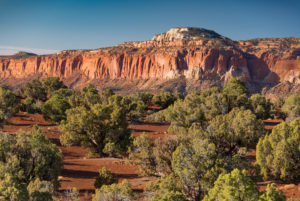
Desolation Canyon (looking west/northwest to the Badland Cliffs, where Gasco wells are proposed). Copyright Ray Bloxham/SUWA


WASHINGTON (March 16, 2012) — The Obama administration’s decision today authorizing nearly 1,300 new natural gas wells in Utah’s Desolation Canyon wilderness and other remote areas will degrade the pristine region’s air quality and hurt the state’s tourism industry, according to a coalition of environmental groups.

In approving the so-called Gasco development project, the Department of the Interior also rejected calls by the Environmental Protection Agency and tens of thousands of citizens from across the country to approve an alternative to Gasco’s proposal. This alternative would have allowed for significant development while protecting the department’s plan to designate Desolation Canyon as wilderness and reducing the overall footprint and impact of the project.

“Secretary Salazar is making the wrong decision to approve the Gasco project in a way that creates irreversible risks to Desolation Canyon,” said Peter Metcalf CEO/President of Black Diamond, Inc.  “This decision is particularly disappointing in light of the fact that conservationists, and the EPA (with support of the leading companies in the American outdoor industry) endorsed an alternative drilling plan that protected the sanctity of the Desolation Canyon proposed wilderness, while allowing for robust drilling to occur on a huge parcel abutted to the proposed wilderness area.  It is truly tragic that the BLM can’t show some small degree of balance.”

The Desolation Canyon region is important to Utah’s desert recreation and tourism, a $4 billion industry that generates approximately $300 million annually in state tax revenue and supports 65,000 jobs.

The Desolation Canyon proposed wilderness is the largest unprotected roadless complex in the lower 48 states. Centered around the Desolation Canyon stretch of the Green River, the area’s spectacular solitude and endless vistas are awe-inspiring. But now this remarkable place is once again in the crosshairs for destruction.

“It’s bewildering that Secretary Salazar – who has been such a strong advocate of conserving America’s great outdoors — would allow turning Desolation Canyon into an industrial wasteland,’’ said Sharon Buccino, director of NRDC’s Land and Wildlife program. “Desolation Canyon has some of the most stunning wilderness vistas found anywhere.  It is no wonder that EPA gave this proposal its worst environmental rating possible.”

Gasco – a Colorado-based natural gas company – wants to drill nearly 1,300 new gas wells in the area, including more than 200 new wells in the Desolation Canyon proposed wilderness and gateway areas.

The administration analyzed two alternatives to the company’s proposed action, both of which would have barred drilling in the Desolation Canyon proposed wilderness and while affording greater protections for the Green River and Nine Mile Canyon badlands. But the administration ended up supporting the company’s plans to drill in all these sensitive places.

This approval comes at a time when natural gas prices are at near-record lows due to an abundance of gas supplies, and companies are idling drilling rigs in developed fields in the Uinta Basin.

“Desolation Canyon and Nine Mile Canyon along the Green River are some of the wildest places left in Utah, and they should be protected from drilling,” said Nada Culver, director and senior counsel of The Wilderness Society’s BLM Action Center. “There are more than 1,000 approved BLM drilling permits going unused by oil and gas companies in Utah alone. We should take the most responsible approach to developing this area in order to preserve the spectacular wilderness-quality lands, the rare and extraordinary rock art, and the threatened plant and wildlife species in Desolation Canyon.”

The BLM itself has described Desolation Canyon as “…one of the largest blocks of roadless BLM public lands within the continental United States.  This is a place where a visitor can experience true solitude – where the forces of nature continue to shape the colorful, rugged landscape.”

Eastern Utah has experienced several years of record high winter-time ozone levels that is largely linked to oil and gas development. According to Gasco’s own data, this project will add to those unsafe pollution levels.

“Secretary Salazar’s approval of the controversial Gasco project stands in stark contrast to the agreements worked out over the past few years between industry, the Interior Department, and conservation groups over several natural gas projects in eastern Utah,” said Stephen Bloch, an attorney for the Southern Utah Wilderness Alliance.  “There is a proven, better way to bring parties together and produce a win-win solution.  It is inexplicable why the Secretary is turning his back on this approach.”

“The Desolation Canyon region is one of the most iconic landscapes of wildness that Utah is known for,” said Tim Wagner of the Sierra Club. “People from all over the world come to Desolation every year for the many outdoor experiences. To permanently mar this area over 200 new natural gas wells is a serious error in land management decision-making.”

# # #

Speak Out Against Irresponsible Oil Shale & Tar Sands Development!

9:03 am

Next week, the Bureau of Land Management (BLM) will hold two public meetings in Utah to take comments on its 2012 Oil Shale and Tar Sands Draft Programmatic Environmental Impact Statement (Draft PEIS).  Please come and make sure your voice is heard in favor of protecting Utah’s redrock wilderness!

Vernal
Tuesday, March 13, 2012
Westin Plaza Hotel
1684 West Highway 40
7:00 pm – 9:30 pm
Salt Lake City
Wednesday, March 14, 2012
Grand America Hotel
555 South Main Street
7:00 pm – 9:30 pm


The Draft PEIS is an effort by the BLM to determine what areas – if any – in Utah, Colorado, and Wyoming should be available for dangerous and far-fetched oil shale or tar sands leasing and development.

BLM’s Draft PEIS is also a revision to a disastrous Bush-era plan that opened 670,558 acres of public land for oil shale leasing and 430,686 acres for tar sands leasing in Utah alone, including some of the state’s most iconic wilderness-quality lands such as White Canyon and Fiddler Butte.  As a result of litigation brought by several environmental groups, including SUWA, the BLM is now revising that plan.

In the recently-released Draft PEIS, the BLM’s preferred alternative (Alternative 2b) proposes to make 252,181 acres available for shale leasing in Utah and 91,045 acres available for tar sands leasing.  This is still too much! BLM’s proposal would leave these lands open for speculative development that could foul public lands, air and water quality, and result in large quantities of greenhouse gasses.

For that reason we support a different alternative (Alternative 3) that would go even further to shutting the door on this “unconventional” fuels nightmare.  Alternative 3 prohibits new oil shale leasing and most tar sands development.  Under this alternative, only existing oil shale research, development, and design leases would remain on public lands.  One commercial tar sands project just outside of Vernal could continue to undergo environmental reviews and permitting.  That’s it.

Please attend the public meeting in your area and tell the BLM that America should stop chasing the will-o-the-wisp of oil shale and tar sands.  Our public resources are better focused on alternative means of meeting our energy needs through, among others, renewable energy and energy efficiency.

For more information about the public meetings, see the BLM news release.

SUWA petitions state agency to protect Colorado, Green Rivers

1:05 pm

In early February, SUWA petitioned a little-known state agency to protect the mighty Colorado and Green Rivers from activities like oil and gas leasing.  The Utah Division of Forestry, Fire and State Lands oversees the management of so-called “sovereign” or “state lands,” which include the lands underlying navigable waters within Utah like the Great Salt Lake and larger rivers, like the Colorado and Green.

Unlike the BLM with its multiple-use mandate and Utah’s School Trust Lands Administration with its myopic focus to maximize short term gain, the DFFSL is required to manage its lands according to something called the “public trust doctrine.” This requires that the state put the long term protection and preservation of natural resources above short term economic gain.

How does the DFFSL actually manage these lands? A bit haphazardly it turns out.  DFFSL is supposed to prepare something called a “comprehensive management plan” which outlines management objectives for specific water bodies and then develop site specific plans for particular issues like recreation and mineral development.  There is no such comprehensive plan for the Colorado and Green Rivers.  Instead, DFFSL follows a 1998 mineral leasing plan for the rivers which allows for oil and gas leasing in special places like Labyrinth Canyon, Westwater, and the Daily Section of the Colorado.

The folks at DFFSL would tell you – “hold on a minute, we sell these leases with ‘no-surface occupancy stipulations” – meaning that companies can’t put up a drill rig on the river’s edge.  What they won’t tell you is that these leases can drive development just a few hundred feet away or on the hills overlooking the river.

We’ve had DFFSL officials tell us that they have talked with BLM staff about this and have been told they (BLM) can’t imagine allowing such a thing to happen on neighboring public lands.  Sure, and we’ve got some great oceanfront property to sell in Utah’s west desert.  That kind of “promise” will be cold comfort when a company is given the green light to drill on the BLM lands along the Daily Section.

Back to our story.  SUWA has petitioned DFFSL to prepare a comprehensive management plan for the Colorado and Green Rivers to guide how that agency manages these remarkable resources. In the meantime, we’ve asked them not to offer or sell any new oil and gas or other leases.  In other words, “think first, lease later.”  DFFSL has done the same thing on the Great Salt Lake – deferring new mineral leasing while it prepares a new comprehensive plan.  It only makes sense to do the same thing here.