Southern Utah Wilderness Alliance

Has Obama caught monument fever?

1:41 pm

Here’s what is happening this month with the redrock:
1.  Support for protecting Desolation Canyon spreads nationwide.
2.  Today Fort Ord, can Greater Canyonlands be next?
3.  House continues its war on wilderness.
4.  Attend events in Moab and Boulder, CO to celebrate Greater Canyonlands!


Drumbeat continues against Desolation Canyon drilling proposal

Last month, we told you about the Interior Department’s ill-conceived plan to allow Gasco to drill over 200 natural gas wells in the Desolation Canyon proposed wilderness.

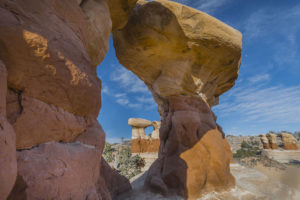
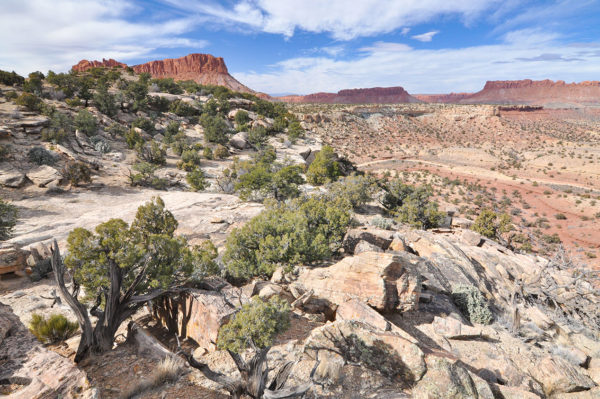
This photo is of Desolation Canyon – at the Sand Wash airstrip looking north to the Sand Wash put-in. Drilling of gas wells proposed by the Obama administration could be seen and heard from this site.

Since then, voices from across the country have stood up and urged Interior to instead adopt an alternative proposal that would spare Desolation Canyon’s wild lands from the impacts of energy development.

In the past month, the Salt Lake Tribune has not once, but twice declared that this is not the way to do things.  The New York Times also editorialized against this boondoggle. The Akron Beacon-Journal in northeast Ohio joined in on the criticism of the project.

Additionally, six public lands champions in Congress sent the Obama administration a letter asking Interior to fix the Desolation Canyon drilling plan.

But most importantly,YOU have taken action against drilling in the Desolation Canyon proposed wilderness, sending almost 20,000 messages to the Obama administration so far through action alerts and petition signatures.

Let’s keep up the drumbeat! While the initial “waiting period” for the final decision on this proposal ended on April 16, the BLM hasn’t issued its ‘record of decision’ for the Gasco project and can still change its mind about which alternative to adopt.

You can help spread the word by sharing our Change.org petition throughout your social networks — tell your friends to also take action to protect Desolation Canyon!


Obama declares second national monument – what will be next?


Today, Friday, April 20, President Obama designated the second national monument of his first term by protecting Fort Ord in California.  Has he caught a serious case of monument fever?


Colorado College students are wild about protecting Greater Canyonlands!

That has yet to be determined, but Greater Canyonlands supporters across the country sure have.  From participating in our Facebook campaign to waving “President Obama: Protect Greater Canyonlands” signs at events, redrock activists are going wild about protecting Greater Canyonlands.

Last week, college students from Colorado College donned bright yellow and black “Tell President Obama: Protect Greater Canyonlands” t-shirts when Interior Secretary Ken Salazar visited campus.  Elsewhere around Colorado, college students have been busy collecting postcards and Facebook messages in support of the campaign.  And local organizations in Moab are planning to celebrate Greater Canyonlands as part of their Earth Day celebration.

Want to help convince President Obama to make Greater Canyonlands the next national monument? Here’s how:

1) “Like” the Protect Greater Canyonlands Facebook page and invite friends to “like” the page as well.

2) Send a photo message to President Obama and use it to spread the word about protecting Greater Canyonlands.  Visit our Facebook app or greatercanyonlands.org to get started.  You’ll also be entered to win a prize in a monthly drawing — a Petzl headlamp is the prize for May!

3) Send President Obama an email message by clicking here.

4) Visit greatercanyonlands.org to find out other ways that you can amplify your message to President Obama.


Angling to chip away at conservation, House passes flawed “hunting” bill

This week the House of Representatives passed a deeply flawed “hunting” bill, H.R. 4099, chipping away wilderness and Wilderness Study Area protections, and watering down the President’s authority to designate national monuments under the Antiquities Act.

The latter occurred when the House passed an amendment requiring national monument designations to be approved by the state legislatures and governor of the host state. Had such provisions been in effect previously, national treasures like Arches, Bryce and Zion National Parks, and the Grand Tetons National Park would not have been protected by the short-sighted Utah and Wyoming legislatures of the time.

And though it was ostensibly about guaranteeing hunting and fishing rights on federal land (rights which are already robustly protected, and which we support), the effective language of the bill raised concern it would allow commercial development and motorized use in areas managed as wilderness if those activities could be justified by hunting or fishing. An amendment to clarify such activities would not be allowed failed, indicating that indeed, the intent was chip away at habitats—not protect hunters.

It’s now up to the Senate to keep this bad bill language—which guts the Antiquities Act and tramples wilderness—off of the President’s desk.


Celebrate Greater Canyonlands in Moab, UT and Boulder, CO!

Planning to be in southeastern Utah tomorrow, Saturday, April 21?  Don’t miss the 1st Annual Moab Earth Day Bazaar: An Ode to Greater Canyonlands! This free event starts at 11 a.m. at Swanny Park.  Click here for more information.

Next month, renowned climbers Lynn Hill and Steve “Crusher” Bartlett will talk about the Greater Canyonlands region as a resource for climbers and a place worthy of protection at Neptune Mountaineering in Boulder, CO on May 17.  More info coming soon!  Email Jackie at jackie@suwa.org with questions.


Sign the petition to protect Greater Canyonlands

Utah Wilderness News, October 24, 2011

12:35 pm

Protecting western lands: a legacy opportunity for President Obama

“To be honest, Obama is traveling to Denver this week because he needs to win Colorado in 2012. His support for Western wilderness could reveal him, not only as a consummate politician strategizing for regional votes, but as a president who follows Stegner’s words by consecrating for all Americans, and for our global visitors, ‘a geography of hope.’

Perhaps a grand vista seen through the clear air from a mountain peak or a meditative moment in a serene, slick-rock canyon could awaken in the president a knowing sense that preserving Western landscapes is as essential to the national interest as the security of jobs and a sound economy. It can also be important to the electing of presidents and building their legacy.”  Op-ed – The Aspen Times

A parade of untrustworthiness by Utah elected officials

“Sen. Orrin Hatch and Rep. Rob Bishop begin this recent parade of untrustworthiness by protesting the use of the Antiquities Act to protect public lands. They cynically and disingenuously bristle about Utahns being more than capable “of managing our own lands,” and they rail against ‘unelected bureaucrats’ who do so in our stead.

Do they really think that the state of Utah will do a better job managing 33 million acres of federal lands when we can’t keep our 95,000 acres (and a million acres of surface water) in Utah state parks solvent?

Hatch, a United States senator for the past 34 years, and Bishop, chairman of the House Resources subcommittee on National Parks, Forests and Public Lands, know perfectly well that public lands do not belong to Utahns alone. And they disrespect the decent ‘unelected bureaucrats’ who work for the federal land management agencies, devoting their lives to our natural heritage.”  Op-ed – The Salt Lake Tribune

Great news for wilderness! Forest roadless rule upheld

“Southern Utah Wilderness Alliance attorney Heidi McIntosh said the ruling makes clear that federal land managers can preserve some lands under their multiple-use mandates.

‘It’s a pretty definitive statement,’ she said.”  Read more – The Salt Lake Tribune

What ifs and if onlys: Anti-wilderness claims just don’t add up

1:35 pm

A hearing on tax relief programs in counties with abundant federal land turned into yet another soap-box rap session for anti-wilderness representatives today.

Rep. Rob Bishop played host to Southern Utah University professor Ryan Yonk, who gave testimony to the Public Lands Subcommittee about his recently issued (though un-peer-reviewed) paper asserting wilderness and protective designations for federal lands have a “non positive” or even “negative” impact on local communities.

What that has to do with the Payments in Lieu of Taxes program, through which the federal government gives subsidies to counties with federal land to make up for a lack of property taxes–and the intended subject of the hearing–was unclear.

Nevertheless, Yonk was there to testify that conservation hurts rural communities. That’s an assertion that contradicts those made recently by Headwaters Economics, which studied 17 national monument designations made post-1982 and found that in no case did the local economies suffer as a result.

Yet, even though he was there as the anti-wilderness poster child, Yonk’s case fell short in the indictment of protecting federal lands. For example:

–Yonk said protections for lands “increase costs to communities.” But he hedged when addressing whether undoing said protections would equal a golden goose. “Establishing what would happen gets to be very difficult and it involves examining what resources are actually available on which public lands.” In other words, sweeping generalizations about these things are tricky.

–A recent  Headwaters Economics report found in Kane and Garfield Counties, the two counties with access to the Grand Staircase-Escalante National Monument, all indicators of economic growth improved following monument designation. Yonk testified the problem he saw with that was Headwaters used government growth data without taking into account what kind of growth the area may have had anyway, in a vacuum, regardless of the monument, or what kind of growth other non-monument counties similar in nature experienced. Because Headwaters’ purpose was to investigate what the relationship between monuments and growth actually is, the critique is silly. The fact, like it or not, is that no correlation between monuments and negative growth existed.

–Finally, Yonk testified that he takes into account the “opportunity costs” of conservation designations, like whether industry could have developed the land were it not under conservation-oriented management. But Yonk said even so, his study didn’t take into account the much-lamented-by-Bishop lost opportunity cost of the Andalex Coal Mine that once was proposed for the remote Kaiparowits Plateau. Why?

“We have serious doubts about whether it would have been open today,” Yonk said, citing what he perceives as a “regulatory burden.”

So instead of a theoretical coal Shangri-La that wouldn’t be active anyway, 15 years ago we protected a spectacular piece of the American West for all future generations to enjoy–an act an overwhelming majority of Economist readers just agreed has innate value. Sounds like that “opportunity cost” was actually a bargain.

The Wrong Side of History: House Attacks on Antiquities Act Continue

1:29 pm

The shameless onslaught of the Great Outdoors Giveaway continued this morning in the House of Representatives when six bills all designed to undermine the Antiquities Act received testimony before the Public Lands Subcommittee.

One of them, Rep. Rob Bishop’s so-called “Utah Lands Sovereignty Act,” would prevent any future president from designating national monuments in the state, eliminating one of the finest scientific and conservation legacies President Teddy Roosevelt left us: the ability to protect from pothunters, vandals, exploitative industry and indiscriminate off-road vehicle users the rich cultural inheritance left to us by the Ancestral Puebloans and the early pioneers; the ability to engage in scientific discovery on our public lands; and the ability to pass that heritage to our children.

But there’s one more benefit to national monuments that frequently gets overlooked by Rep. Bishop and his cohorts: they are a boon to the communities that surround them. Indeed, far from the “unnecessary hardships” Bishop claimed resulted from the 1996 designation of Grand Staircase-Escalante National Monument, the economies of nearby communities are actually thriving in the years since.

According to the non-profit, non-partisan testimony of Ray Rasker of Headwaters Economics, from 1996-2008 in Garfield and Kane Counties, the two counties with direct access to the Grand Staircase-Escalante National Monument:

  • Population grew by 8 percent
  • Jobs grew by 38 percent
  • Real personal income grew by 40 percent
  • Per capita income grew by 30 percent

Rasker said areas with protected lands attract businesses, workers and retirees because of their quality of life, and tourism follows as well. While he could not state a direct cause and effect between monument designation and economic growth, there was one thing that was definite.

”In no case did we find that the creation of a national monument led to an economic downturn,” Rasker said, after reviewing 17 national monuments, all greater than 10,000 acres, all designated after 1982.

The Antiquities Act has been used time and again since 1906—128 times by 15 presidents of both parties—to preserve treasures unique to the American story. Arches, Bryce and Zion were all national monuments before they became national parks. The Grand Staircase-Escalante and Dinosaur National Monuments each propelled scientific discovery in paleontology, yielding countless new species of dinosaurs and integral clues to the past. All of these provide untold scenic and recreational values to visitors, who flock from all over the country and the world to see them.

Indeed, on its own tourism website, Kane County touts the fact it offers “access to more national monuments and parks than any other place,” and says the “Grand Staircase-Escalante National Monument is a dramatic, multi-hued landscape that is rich in natural and human history.”

Fortunately, our own recent history has included the vision to protect those places with the Antiquities Act, and an attempt to defund the Act this spring was swatted down by a bipartisan force in the House of Representatives that included 213 Democrats and 34 Republicans. We hope this sensible protection of one of our nation’s best tools will continue, so please contact your representatives to ask them to stop the attack on national monuments.

As Rep. Raul Grijalva of Arizona put it in the hearing, those who would do so “are on the wrong side of history.” And, as it turns out, the wrong side of economics.