Southern Utah Wilderness Alliance

Robert Redford speaks up for Desolation Canyon

12:35 pm

In the Denver Post yesterday, Robert Redford wrote:
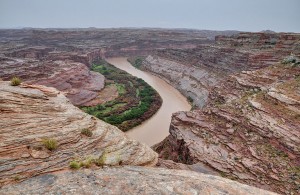
We have few places left that represent the raw beauty and the history of our American West like Desolation Canyon, in my home state of Utah.

It was designated as a National Historic Landmark in 1968 for good reason. John Wesley Powell explored Desolation Canyon a century earlier, one of the last uncharted places in the lower 48 states. For thousands of years before that, the region was home to American Indian tribes including the Hopi, Fremont and Ute people. Their pictographs and petroglyphs still line the canyon walls; silent reminders linking us to the most fundamental roots of civilization.

Yet now, much of that is at risk.

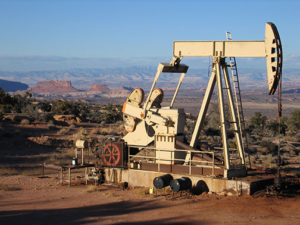
The Interior Department is on the verge of approving a Denver company’s proposal to drill nearly 1,300 gas wells in northeast Utah.

Denver-based Gasco Energy wants to drill more than 200 of these wells in the Desolation Canyon proposed wilderness area alone. It wants to put more holes into the surrounding plateaus that until now have remained unthreatened for all of history.

Think about the consequences:

Scenic roads throughout the region would suddenly be clogged with diesel trucks and drilling equipment. Debris from drilling and construction of pipelines and service roads would threaten tributaries to the Green River. Sounds of drilling would replace the last vestiges of natural silence and would be heard at Sand Wash, the put-in for recreational river runners vital to Utah’s tourism industry. One of the most remote places in America would be despoiled.

Is this what we really want to do to our country? Certainly, it’s not what most Americans want.

Read the rest of his op-ed by clicking here.

Then, join Robert Redford’s call to protect Desolation Canyon by signing our Change.org petition and spreading the word!

Utah Wilderness News, April 9, 2012

9:36 am

Interior is “making the wrong move”

“But on one new project, the Interior Department is making the wrong move. It has tentatively approved a huge, overly aggressive natural gas drilling project in northeastern Utah. Gasco, a Denver-based company, plans to sink 1,298 wells in the next 15 years on 206,000 acres. About 200 of these wells would threaten Desolation Canyon, a wild, spectacular and fragile landscape.”  Editorial – The New York Times

A trend towards reasonable compromise could be coming to an end

“The problem is not that there will be new gas wells in eastern Utah. The problem is that neither Gasco nor the BLM has shown any inclination to slow down and talk to the conservation groups — as Bill Barrett and Enduring Resources responsibly did — about some tweaks that would minimize environmental damages.”  Editorial – The Salt Lake Tribune

A win-win scenario

“The U.S. Bureau of Land Management has announced its intention to approve a major Uinta Basin drilling expansion that seemingly has something for everyone — 3,675 wells to continue the boom, air-quality controls to limit ozone and river canyon protections that environmentalists like.”  Read more – The Salt Lake Tribune

BLM to Approve Disastrous Development Project in Desolation Canyon Proposed Wilderness

9:23 am

Desolation Canyon (looking west/northwest to the Badland Cliffs, where Gasco wells are proposed). Copyright Ray Bloxham/SUWA


WASHINGTON (March 16, 2012) — The Obama administration’s decision today authorizing nearly 1,300 new natural gas wells in Utah’s Desolation Canyon wilderness and other remote areas will degrade the pristine region’s air quality and hurt the state’s tourism industry, according to a coalition of environmental groups.

In approving the so-called Gasco development project, the Department of the Interior also rejected calls by the Environmental Protection Agency and tens of thousands of citizens from across the country to approve an alternative to Gasco’s proposal. This alternative would have allowed for significant development while protecting the department’s plan to designate Desolation Canyon as wilderness and reducing the overall footprint and impact of the project.

“Secretary Salazar is making the wrong decision to approve the Gasco project in a way that creates irreversible risks to Desolation Canyon,” said Peter Metcalf CEO/President of Black Diamond, Inc.  “This decision is particularly disappointing in light of the fact that conservationists, and the EPA (with support of the leading companies in the American outdoor industry) endorsed an alternative drilling plan that protected the sanctity of the Desolation Canyon proposed wilderness, while allowing for robust drilling to occur on a huge parcel abutted to the proposed wilderness area.  It is truly tragic that the BLM can’t show some small degree of balance.”

The Desolation Canyon region is important to Utah’s desert recreation and tourism, a $4 billion industry that generates approximately $300 million annually in state tax revenue and supports 65,000 jobs.

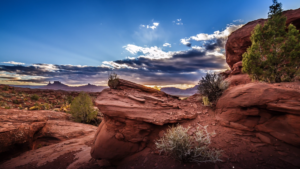
The Desolation Canyon proposed wilderness is the largest unprotected roadless complex in the lower 48 states. Centered around the Desolation Canyon stretch of the Green River, the area’s spectacular solitude and endless vistas are awe-inspiring. But now this remarkable place is once again in the crosshairs for destruction.

“It’s bewildering that Secretary Salazar – who has been such a strong advocate of conserving America’s great outdoors — would allow turning Desolation Canyon into an industrial wasteland,’’ said Sharon Buccino, director of NRDC’s Land and Wildlife program. “Desolation Canyon has some of the most stunning wilderness vistas found anywhere.  It is no wonder that EPA gave this proposal its worst environmental rating possible.”

Gasco – a Colorado-based natural gas company – wants to drill nearly 1,300 new gas wells in the area, including more than 200 new wells in the Desolation Canyon proposed wilderness and gateway areas.

The administration analyzed two alternatives to the company’s proposed action, both of which would have barred drilling in the Desolation Canyon proposed wilderness and while affording greater protections for the Green River and Nine Mile Canyon badlands. But the administration ended up supporting the company’s plans to drill in all these sensitive places.

This approval comes at a time when natural gas prices are at near-record lows due to an abundance of gas supplies, and companies are idling drilling rigs in developed fields in the Uinta Basin.

“Desolation Canyon and Nine Mile Canyon along the Green River are some of the wildest places left in Utah, and they should be protected from drilling,” said Nada Culver, director and senior counsel of The Wilderness Society’s BLM Action Center. “There are more than 1,000 approved BLM drilling permits going unused by oil and gas companies in Utah alone. We should take the most responsible approach to developing this area in order to preserve the spectacular wilderness-quality lands, the rare and extraordinary rock art, and the threatened plant and wildlife species in Desolation Canyon.”

The BLM itself has described Desolation Canyon as “…one of the largest blocks of roadless BLM public lands within the continental United States.  This is a place where a visitor can experience true solitude – where the forces of nature continue to shape the colorful, rugged landscape.”

Eastern Utah has experienced several years of record high winter-time ozone levels that is largely linked to oil and gas development. According to Gasco’s own data, this project will add to those unsafe pollution levels.

“Secretary Salazar’s approval of the controversial Gasco project stands in stark contrast to the agreements worked out over the past few years between industry, the Interior Department, and conservation groups over several natural gas projects in eastern Utah,” said Stephen Bloch, an attorney for the Southern Utah Wilderness Alliance.  “There is a proven, better way to bring parties together and produce a win-win solution.  It is inexplicable why the Secretary is turning his back on this approach.”

“The Desolation Canyon region is one of the most iconic landscapes of wildness that Utah is known for,” said Tim Wagner of the Sierra Club. “People from all over the world come to Desolation every year for the many outdoor experiences. To permanently mar this area over 200 new natural gas wells is a serious error in land management decision-making.”

# # #

Utah Wilderness News, February 29, 2012

1:08 pm

The Greater Canyonlands campaign has spread to Colorado!

“In this election year, Coloradans could play a critical role by asking President Obama to proclaim the Greater Canyonlands region as a National Monument. President Obama has the power, through the federal Antiquities Act of 1906, to make such a proclamation with the stroke of a pen, and 1.4 million acres of federally owned public lands have been identified as worthy of this action. These acres have long been a destination for front-range families, and protecting them will ensure that current and future generations can renew spirits, bond with family and friends, and create memories that last a lifetime.”  Guest column – Boulder Daily Camera

“A campaign to ‘Protect the Greater Canyonlands’ – 1.4 million acres of land surrounding Canyonlands National Park in southern Utah – has been sweeping across Colorado campuses, encouraging students to call on President Obama’s ability to preserve this wild space from ‘rampant off-road vehicle abuse, proposed uranium and tar sand mining and oil and gas development.’”  Read more – Denver University Clarion

“I am one Coloradan of many who has a deep connection with the red rock country of Utah and visit as often as possible. Not only is it home to visual and historical treasure, its desert offers a restorative peace that is like nothing else I’ve experienced.

Unfortunately, only some areas are protected; many are still vulnerable to destruction due to off-road vehicle use and mining. It is time that President Obama recognize the threat and take action to ensure that the wild lands of Utah are unequivocally protected.”  Letter-to-the-Editor – Boulder Daily Camera

Utah Wilderness News, February 10, 2012

9:36 am

LTEs from Moab praise the Interior Department’s Master Leasing Plans

“As both an owner of a tourism-oriented business and as the mother of a young son, I was happy to read that the Department of Interior will be more closely scrutinizing specific areas in Grand and San Juan Counties before leasing them for oil, gas, and potash development.”  Read more: Moab Times-Independent – Leasing reform…

“Kudos to the Bureau of Land Management for its decision to think first and drill later as it prepares its master leasing plan for the Moab area. I know this is not a popular decision amongst some in our state who claim that temporarily deferring the ability to drill on particular parcels is a form of economic suicide.”  Read more: Moab Times-Independent – Look before you lease…

Remember the tale of Chicken Little?

“To hear Gov. Gary Herbert and Utah’s congressional delegation tell it, times have never been harder for energy companies operating on public lands in Utah. Hardly a day seems to go by without Sen. Orrin Hatch complaining that the Bureau of Land Management isn’t selling oil and gas leases fast enough, or Herbert imagining that the federal government is standing in the way of a robust energy sector. In other words, the sky is falling.

Don’t believe it. The reality is that energy development in Utah is brisk.

The facts speak for themselves. According to The Salt Lake Tribune, at the end of 2011 the state of Utah had a record high number of 10,300 producing oil and gas wells, the majority of which are found on public lands. What’s more, the Utah Division of Oil Gas and Mining reports that the number of drill permit approvals in 2010 and 2011 were two of the highest years for such approvals over the past 25 years. In 2011, about half of those permit approvals were on public lands.”  Op-Ed – The Salt Lake Tribune

Obama has done mostly the right thing on oil shale

“The BLM’s plan favors continued research and development of oil-shale technology, but no commercial leasing of 461,965 acres — 252,181 acres in Utah, 174,476 in Wyoming and 35,308 in Colorado. In addition, nearly 100,000 acres would be made available in eastern Utah for development of tar sands. It’s a far smarter policy than Bush’s. But Republicans are furious. Utah’s Governor Gary Herbert is fuming, the American Petroleum Institute is whining, and the entire Utah Congressional delegation wants the BLM decision scrapped.”  Read more – Daily Kos